
Search
Design Business Council
  • Home
  • what we do
    • we mentor
    • we research
    • we write
    • we advocate
    • we run workshops
      • How to find higher-fee design work
      • How to manage and lead a creative business
      • How to explain the measurable impact of design
  • Design Business Review
  • Who we are
  • How we can help
    • Costing pricing profit toolkit
    • …build financial knowledge
      • Financial mentoring for designers
      • ebook: Finance in a design studio ebook
      • ebook: Bookkeeping for designers
      • ebook: What’s a fair wage?
      • digital copy: the business of design publication
    • … grow your business
      • Business development mentoring
      • ebook: LinkedIn for designers
      • What’s a fair wage ebook
      • digital copy: the business of design publication
    • … build management and leadership skills
      • How to build a great creative business: good for people and profits
      • What’s the risk? ebook
      • What’s a fair wage ebook
      • digital copy: the business of design publication
    • Free resources
  • Connect
  • Home
  • what we do
    • we mentor
    • we research
    • we write
    • we advocate
    • we run workshops
      • How to find higher-fee design work
      • How to manage and lead a creative business
      • How to explain the measurable impact of design
  • Design Business Review
  • Who we are
  • How we can help
    • Costing pricing profit toolkit
    • …build financial knowledge
      • Financial mentoring for designers
      • ebook: Finance in a design studio ebook
      • ebook: Bookkeeping for designers
      • ebook: What’s a fair wage?
      • digital copy: the business of design publication
    • … grow your business
      • Business development mentoring
      • ebook: LinkedIn for designers
      • What’s a fair wage ebook
      • digital copy: the business of design publication
    • … build management and leadership skills
      • How to build a great creative business: good for people and profits
      • What’s the risk? ebook
      • What’s a fair wage ebook
      • digital copy: the business of design publication
    • Free resources
  • Connect
Design Business Council > Business of design > Does the design studio have a future?

Does the design studio have a future?

  • August 12, 2019
  • Posted by: greg@dbc
  • Category: Business of design creative business coach Design business coaching Design business strategy Design index
No Comments
Design studio model

Design studio of the future

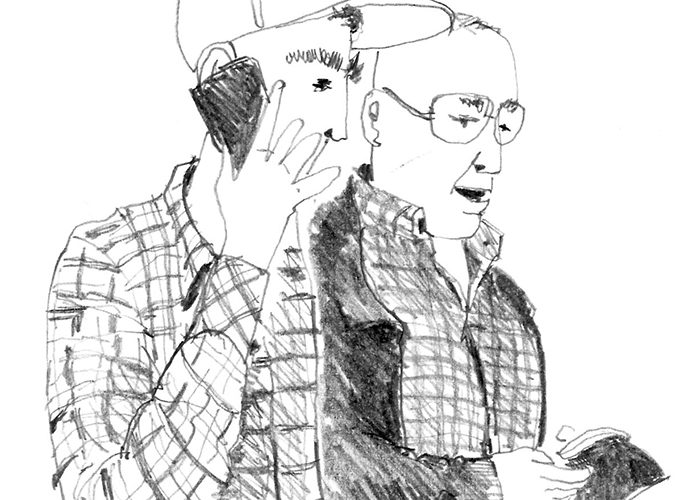
Is this the future design studio?

Will the current design studio model survive in the gig economy where design execution is commoditised?

Is the model changing to value the thinking and expertise of designers?
Is the ‘Hollywood’ production model the future structure for design studios?

A number of events happened recently that led me to question the sustainability of traditional design studios. At a Business of Design Breakfast session last week Charl Laubscher of Love and money outlined his approach to changing the design studio model by only working to 3.30pm each day. He had a very well thought-through process to make this possible. He’ss disrupting the idea of the ‘normal’ 10 hour work day in studios.

Then I heard a Never Not Creative podcast with Jules Ehrhardt of Creative Capital. He has a very interesting idea of how a design business model could operate:

Creatives should also be able to share in the wealth that is created from their work.
This simple belief…

It underpins the Creative Capital model. It stems from a recognition that creative expertise, when properly applied, generates business value. Therefore creative expertise can be considered an asset. On the one side an asset that can be bartered for a share in the value it creates, and on the other an asset that can be invested in for a share in that value.

Jules has a very interesting approach that would suit some design studio owners.

The San Francisco model

Then there is the model that we found on a trip to San Francisco that gave us an insight to the design studio of the future. It’s an interesting variation on the Hollywood model where you hire in the talent as you need it.

Any of you who have read some of our other articles or bought The Business of Design will know that we promote the idea of developing a unique business model for a studio.

It was while meeting with Shel Perkins that we came across a new design business model gaining some traction in San Francisco.

First a bit about Shel Perkins. He’s someone I’ve wanted to meet up with for many years. He’s a graphic designer, management consultant, and educator with more than twenty years experience in managing the operations of leading design firms (Clement Mok Designs, MetaDesign) in the U.S. and the U.K. He provides management consulting services to a range of creative firms in both traditional and new media.

Shel has written the Professional Practice column for STEP magazine, the Design Business newsletter for AIGA, and the Design Firm Management column for Graphics.com. The revised and expanded second edition of his best-selling book, Talent Is Not Enough: Business Secrets For Designers, is now available from New Riders.

Shel teaches post graduate-level courses in professional practices and he has given presentations and workshops for many organisations, including IDSA, SEGD, HOW, Dynamic Graphics, STEP, Seybold, RGD Ontario, and the Graphic Artists Guild.

He has served on the national boards of AIGA and the Association of Professional Design Firms, and was chairman of the AIGA Center for Practice Management.

Over a cup of coffee we discussed the similarities and differences between design practices in the US, UK and Australia.

Shel outlined an issue with large corporates establishing their inhouse studios (more about that in a later article) and the way that he observes his graduate students forming design studios.

The one job studio

Shel’s graduate students are working and studying and so they have to find employment. He described how many of them were pitching for projects and then forming a project team just to do that job. The team members come and go as needed and even the ‘founder’ may leave before the project is completed. The idea is that team members only stay on board for as long as their talents are needed.

This is a great model because it’s so adaptable. The team adopts a name and works under that for the life of the project. The group disbands at the end of the project.

Shel described the ‘dinosaurs’ of the industry as those owners who have their name on the door. He sees this as the old method of ‘owner as the source of all knowledge’. In his years of practice he has watched many of these firms disappear when the owner no longer wants to work.

This model has the chance to be very disruptive. Consider that you have six entrepreneurial designers who choose to collaborate and work this way. Each of them could be seeking out projects with a value of $100k or more. They collaborate to pitch for the project with an appropriate teaming up of talents. They have none of the long term costs of running a studio and hence they can be price competitive or make larger profits.

Take away point

Think about the model that you have for your business. Even as a sole practitioner you have the potential to disrupt the major players with a studio of full time designers/employees.


Greg Branson

Greg’s passion is the research and development of methods that improve design management and the role of design in business.

Greg has developed The Design Business School to help owners manage their business better along with showing designers how to get more involved in the studio and develop their career path. Contact Greg.

Recent Posts

  • Clients are not waving, they’re drowning
  • Sell impact not output
  • Why great ideas get rejected
  • Three questions to defeat AI
  • AI protocols
  • The conversation has changed
  • From supplier to creative consultant
  • Just turn up
  • We need to talk about design studio budgeting
  • What to say when clients say ‘we need to think about it’
  • The emotion and psychology of pricing
  • Creative out of office replies
  • Measure what matters
  • (New) skills needed to survive
  • Before you look for work, look at how you work
  • Are you accidentally ripping-off freelancers?
  • If your peers talk business and you talk design, you’ll lose
  • Why your competitors are stealing your clients
  • Designing your way through a crisis
  • Has design got over complicated
  • Stop networking like everyone else
  • Why care about competitors
  • Designers should dump networking groups
  • Sprint to the finish line (instead of limping to the end of the year)
  • Australian designers and burnout: what’s driving it and how to stop it (2025)
  • What’s your knowledge sharing contribution?
  • Proving a return on design investment (RODI)
  • Why clients offer design advice and how to change the conversation
  • How to reconnect with past clients
  • Skills new business managers need
  • Designers who choose challenge over comfort
  • How many new clients do you actually need?
  • Why designers who fear specialisation have got it wrong
  • Talking straight: how open dialogue fuels Dutch creativity
  • Conversations with Amsterdam creatives
  • How to run design experiments
  • Why most new business managers fail
  • Why design experiments matter
  • Our annual research trip: this time London, Amsterdam, Berlin and Munich
  • How designers can influence client behaviour (without being manipulative)
  • The client design ladder: moving clients from styling to strategy
  • Why clients resist change (and how to help them embrace it)
  • 56% of clients think agency websites lack clarity
  • The big issues for Australian design agencies
  • Why are there no retirement parties for designers?
  • The freelancer dilemma: peer or assistant?
  • What clients really think: 5 key insights from 2025 research
  • How design business owners can use AI to help clients
  • Case study: helping a design agency find their niche
  • What type of creative business suits you?
  • Five signs your studio is actually a production house
  • Defining and measuring design impact
  • Why we’ve changed our mind about design value
  • How to measure design impact without client data
  • Stop chasing work-life balance
  • How to find design projects beyond the marketing team
  • The lifecycle of a creative business
  • 5 benchmarks for a creative business
  • The truth about design impact
  • Leading in the new reality of design and business
Design management Design strategy Studio management

We acknowledge the Traditional Owners of the land on which we live, work and play; the Peoples of the Kulin Nation.

Home
What we do
About DBC
The Review
Store

  • Facebook
  • LinkedIn
  • YouTube

Copyright © 2022 Design Business Council

Copyright © 2022 Design Business Council
  • home
  • About DBC
  • The Review
  • Store